

© 2035 by The Clinic. Powered and secured by Wix

Teen Apprenticeships
Tues & Thrus
10:00 am-3:00 pm
Adolescence is not meant to be managed; it is meant to be mentored.
The Teen Apprenticeship Program is designed to meet young people at the threshold between childhood and adulthood. Rather than separating academic learning from real life, our apprenticeships integrate literacy, mathematics, biology, physiology, anthropology, developmental psychology, traditional medicine, ecology, and cultural studies directly into meaningful, hands-on work.
Teens are not simply “learning about” subjects, they are living them.
In an apprenticeship, math becomes budgeting, measuring, planning, and patterning.
Literacy becomes research, storytelling, documentation, and communication.
Biology becomes soil health, plant medicine, ecosystems, and animal physiology.
Anthropology and developmental psychology become a lived observation of community, culture, and human growth.
This model restores dignity to learning. It cultivates focus, responsibility, skill, discernment, and self-awareness — preparing teens to move into adulthood not dependent, but sovereign.
Academic Transcript Alignment
Our Teen Apprenticeship Program is intentionally designed to meet and exceed core high school academic standards through experiential, interdisciplinary learning.
Each apprenticeship includes structured academic integration that can be documented for transcript purposes in the following subject areas:
Science
Botany, Biology, Human Physiology, Ecology, Conservation Biology, Environmental Science
Mathematics
Applied mathematics through measurement, formulation ratios, budgeting, planning, agricultural math, apothecary calculations, data tracking, and project management
English / Language Arts
Research literacy, reflective writing, documentation, storytelling, presentation skills, field journals, and formal research summaries
Social Studies
Anthropology, cultural studies, history of medicine, agricultural history, developmental psychology foundations, and community systems
Health & Wellness
Nutrition, traditional medicine systems, somatic awareness, body systems, and preventative care principles
Fine Arts / Practical Arts
Fiber arts, handicraft, botanical illustration, functional art, and traditional craft skills
Apprentices maintain:
-
Field journals
-
Project portfolios
-
Research summaries
-
Skill competency records
-
Presentation documentation
-
These materials allow families to translate apprenticeship hours into credit documentation appropriate for homeschool transcripts or alternative education pathways.
For families navigating high school credit requirements, we provide structured documentation outlining hours, subject integration, and demonstrated competencies.
Daily Rhythm of
Teen Apprenticeships
10:00 am-3:00 pm
10:00am–10:30am
Opening & Daily Intention
10:30am–12:00pm
Skill Immersion Block
12:00 pm–12:45 pm
Community Lunch
12:45pm–1:30pm
Mentorship & Academic Support Block
1:30pm–2:30pm
Applied Study & Documentation
2:30pm–2:50pm
Stewardship & Responsibility
2:50pm–3:00pm
Closing Reflection
We are not simply teaching skills.
We are restoring the conditions that allow young people to step into responsibility, authorship, and sovereignty.
When teens are entrusted with real work, confidence becomes embodied.
When knowledge is applied in living systems, identity strengthens.
When adolescents contribute meaningfully to the village, they discover who they are, and whom they are becoming.
This is not enrichment.
This is initiation.
This is preparation for resilience; in body, mind, and community.


Why Apprenticeship Matters in the World We Live In
Modern adolescence is largely separated from meaningful responsibility. Young people are often over-schooled academically and under-mentored developmentally. They are surrounded by information, yet disconnected from application. They are highly stimulated, yet rarely entrusted with real contribution.
Village-based cultures understood something different.
Anthropological research consistently shows that in traditional societies, adolescents were gradually integrated into adult work through mentorship and apprenticeship, not isolated into peer-only environments. Responsibility was not withheld until adulthood; it was scaffolded.
As anthropologist David Lancy notes in The Anthropology of Childhood:
“In most traditional societies, children learn by observing and pitching in to ongoing activities, gradually assuming more responsibility as their competence increases.”
Apprenticeship is not a romantic idea; it is an evolutionary model of human development.
Developmental psychology also supports this structure. Adolescence is the stage where identity formation becomes central. Erik Erikson described this phase as the tension between identity and role confusion. When young people are given real roles within a community, identity stabilizes. When they are not, confusion increases.
Research in motivation theory (Deci & Ryan, Self-Determination Theory) shows that humans thrive when three core needs are met:
-
Competence
-
Autonomy
-
Relatedness
Apprenticeship naturally integrates all three.
-
Teens develop competence through skill.
-
They experience autonomy through increasing responsibility.
-
They deepen relatedness through intergenerational mentorship.
In a world marked by digital saturation, social fragmentation, and rising anxiety among adolescents, apprenticeship restores something ancient and stabilizing:
-
Meaningful work.
-
Embodied learning.
-
Belonging within a real community.
Village Theory reminds us that children and teens are shaped not only by curriculum, but by environment, by whom they are surrounded, what they are entrusted with, and how they are invited to contribute.
Apprenticeship is the bridge.
It moves adolescents from passive receivers of information to active participants in culture-making.
This is not nostalgia.
It is a developmental necessity for the times we are living in.
2026-2027
Fall & Spring Programs
Our Spring Session serves as an introduction to the Land & Folks Art and the wider Learning Center community. It is an opportunity for families to experience the rhythm of village life, understand our shared values, and discern if this pathway feels aligned.
Beginning in the Fall, the Land & Folk Arts program will transition into a private membership-based community. Families who have participated in the Spring session receive priority consideration as we move into our more deeply committed, relational village structure.
Early Childhood Pathway
Tuesday | 10:00am–3:00pm
Fall 13 weeks
Sept 15th-Dec 15th
(closed Nov 23rd-27th)
Spring 10 weeks
March 2th-May 25th
(closed March 29rd-April 2nd)
Herbal Pathway
Thursday | 10:00am–3:00pm
Fall 13 weeks
Sept 17th-Dec 17th
(closed Nov 23rd-27th)
Spring 10 weeks
March 4th-May 27th
(closed March 29rd-April 2nd)
Workshops
Wednesdays & Saturdays
10:00am–1:30pm
Dates and workshop offerings coming soon — keep an eye out for upcoming announcements.
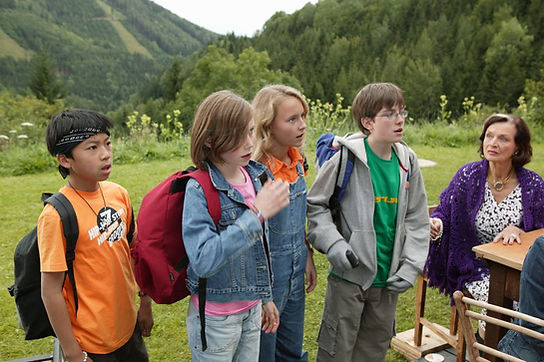
Summer Camp
Ages 6 Years – Teens
June 15–18
10:00 am-3:00 pm
Get ready for four unforgettable days on the land!
Our Summer Camp is packed with hands-on Folk Arts, pond explorations, animal husbandry, regenerative and polyculture farming, creative projects, and wide-open summer fun. Campers will weave, carve, garden, harvest, tend animals, explore ecosystems, and cool off by the pond, all while building real skills and real friendships.

The Feathered Lion Portal is the central hub of connection for our Learning Center families. It is where the village continues beyond the land, a space for parent education, communication, research participation, events, and shared responsibility.
Within the Portal, families access:
Parenting Within Mentorship
Bi-weekly parenting conversations
Special guest teachings
Monthly newsletters
Q&A discussions
Event updates
Community-Based Research participation and updates
A rotating monthly parent “role” that supports shared village responsibility
The Portal is not simply informational, it is participatory. It strengthens relationships, continuity, and developmental awareness across the entire community while documenting what becomes possible when the village is lived intentionally.
The Feathered Lion Portal
The Living Hub of Our Learning Community

Growing Together
Get in touch so we can start working together.


