

© 2035 by The Clinic. Powered and secured by Wix
Somatic Early Childhood Apprenticeship
"The future of education begins with those willing to observe the child with reverence and learn from the wisdom already living within them."
The Somatic Early Childhood Teen Apprenticeship is a two-day-per-week program designed for teens who feel called to understand child development, village mentorship, and ecological education.
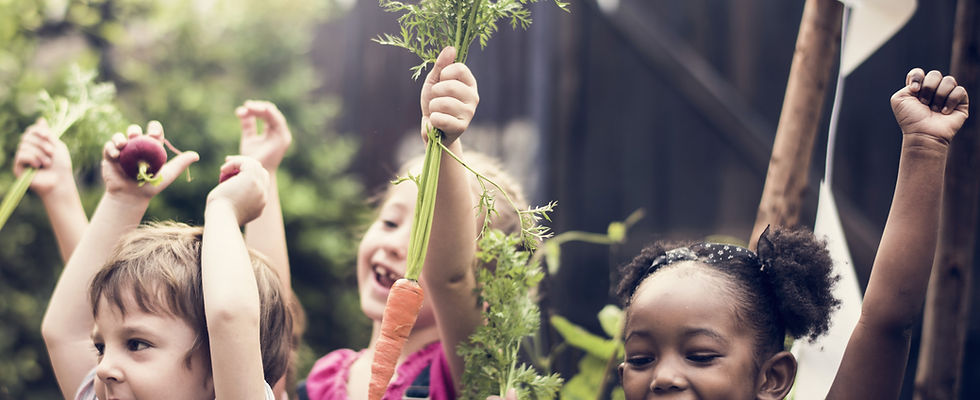
Apprentices work alongside facilitators and young children, learning to observe development through the body, the nervous system, the environment, and the relational field. As they witness the unfolding of early childhood, they begin to recognize how development is not only something that happens to the child, but something that continues to live within each of us. Through this process, apprentices develop the ability to see behavior, emotion, and learning through a deeper developmental lens.
This apprenticeship follows a two-day weekly rhythm of study and practicum.
Mondays are spent within the living learning environment, where apprentices participate in the Little Fledglings Early Childhood program and the Land & Folk Arts program. During this time, students observe young children, assist facilitators, and begin developing the skills of mentorship and presence. Through guided observation, they learn to recognize how children grow through movement, play, imagination, and relationship with the environment and the people around them.
Tuesdays are dedicated to classroom learning, reflection, and developmental study. Apprentices explore the academic foundations of early childhood through subjects such as developmental psychology, anatomy, physiology, nutrition, somatic development, and ecological learning. Writing and reflective dialogue help students integrate what they observed during the practicum day.
Just as apprentices study the layers of early childhood development, they are also invited into a parallel journey of inner reflection and self-awareness. Understanding the child requires an awareness of one’s own inner world. Through guided reflection and journaling, students begin to notice how their own experiences, emotions, and nervous system responses shape the way they perceive and interact with children.
This process builds a strong foundation of presence, emotional awareness, and relational maturity. Apprentices learn that supporting children is not simply about instruction or supervision—it requires the ability to remain grounded, observant, and responsive within the relational field. Developing self-awareness allows mentors to hold space for the authentic expression of the child without projecting their own unresolved experiences into the moment.
Through guided study, reflective writing, and hands-on participation, apprentices learn how the inner world of the child unfolds through relationship with the environment, the rhythms of the land, and the quality of human connection.
This apprenticeship is both academic and experiential, combining developmental study, somatic awareness, and practical leadership skills. By engaging both the outer study of childhood development and the inner cultivation of self-awareness, apprentices begin developing the insight and responsibility needed to become thoughtful mentors, caregivers, and future educators who understand the deep connection between human development, the living world, and the village that holds it.
Learning Framework
The apprenticeship follows the Ecology of Freedom-Based Learning Cycle, which explores development through three interconnected fields:
Inner World
Understanding the child's emotional, sensory, and nervous system development.
Environment
How the physical environment, rhythm, nature, and materials support healthy development.
Relationship Field
How connection, attachment, co-regulation, and community shape the child’s experience of the world.
Apprentices learn to observe how these three fields work together to support secure development and authentic learning.
Class Rythum
Each gathering follows a steady rhythm of observation, study, preparation, and reflection.
Monday & Tuesday
10:00am–3:00pm
Fall $975 13 weeks
Sept 17th-Dec 17th
(closed Nov 23rd-27th)
Spring $750 10 weeks
March 4th-May 27th
(closed March 29rd-April 2nd)

Opening Hour
• Community check-in and orientation
• Observational walk on the land
• Discussion of the current moon phase and seasonal rhythms
• Plant investigation and identification
• Grounding meditation with the plant of focus
Second Hour
• Break
• Intuition-building exercises
• Introduction to pulse and tongue observation
• Herbal lecture and discussion of the plant of the week
• Herbal journal and book work
Midday Break
• Community lunch
Third Hour
• Hands-on herbal preparation and activity
• Somatic exploration with plant medicine or biodynamic work in the garden
• Closing circle and reflections
• Community clean-up
Portfolio Development for College
The Somatic Early Childhood Teen Apprenticeship offers students meaningful academic and real-world learning experiences that can be included in a student’s high school portfolio, transcript, and college application profile.
Because the program combines academic study, reflective writing, and hands-on practicum experience, students are able to demonstrate both intellectual engagement and real-world responsibility, qualities that colleges increasingly value.
Through the apprenticeship, students develop documented experience in areas such as child development, psychology, leadership, mentorship, and observational research. These experiences can be included in a student’s educational portfolio and may appear on transcripts under subjects such as Developmental Psychology, Human Physiology, Early Childhood Education, and Experiential Learning Practicum.
Students also build a portfolio of work that may include:
-
Reflective essays and observation journals
-
Developmental studies and research projects
-
Documentation of mentorship and practicum experience
-
Leadership roles within the learning community
-
Creative or applied projects connected to their studies
These materials help demonstrate a student’s initiative, depth of study, and capacity for real-world learning, all of which strengthen a college application.
Beyond academic documentation, apprentices gain experience in leadership, communication, responsibility, and emotional intelligence, skills that admissions offices recognize as essential for success in higher education and professional life.
For students interested in fields such as education, psychology, child development, health sciences, midwifery, therapy, or community leadership, this apprenticeship can provide an especially meaningful foundation.
Ultimately, the program helps students develop a well-rounded academic and experiential profile, showing colleges that they have engaged deeply with their studies while also contributing to their community.
Areas of Study for the Early Childhood
Apprenticeship
Developmental Psychology
Students explore the stages of human development with a focus on early childhood from birth through age seven.
Students learn to recognize how developmental needs change as children grow and how supportive environments foster healthy emotional development.
Apprentices study how emotional, cognitive, and social development unfolds during the early years and how experiences in this period shape lifelong patterns of learning, attachment, and self-regulation.
-
Stages of early childhood development
-
Emotional development and regulation
-
Attachment and bonding
-
Development of autonomy and self-confidence
-
The role of play in psychological growth
-
Observing behavior through a developmental lens
Somatic Psychology
Somatic psychology focuses on understanding how the body and nervous system influence emotional experience and behavior.
This subject helps students understand that much of childhood communication occurs through the body rather than through language.
Apprentices learn how children communicate through movement, posture, tone, and sensory expression.
-
Nervous system regulation and co-regulation
-
Emotional expression through the body
-
The relationship between movement and learning
-
Sensory development in early childhood
-
Recognizing stress responses and regulation patterns
Human Anatomy & Physiology
Students gain a foundational understanding of how the human body develops and functions.
Understanding physiology helps students see how physical development and learning are closely connected.
Apprentices understand the biological foundations of learning, movement, and emotional regulation.
-
Basic human body systems
-
Brain development in early childhood
-
Nervous system function
-
Musculoskeletal development and movement
-
Sensory systems and perception
Childhood Nutrition
This subject explores how nourishment supports healthy growth, brain development, and emotional stability in children.
Students learn how nutrition supports physical development, cognitive function, and emotional regulation.
Apprentices understand how nutrition supports the foundations of learning, movement, and emotional regulation.
-
Nutritional needs during early childhood
-
Whole food nourishment and balanced diets
-
The relationship between food, energy, and behavior
-
Digestive health and the developing microbiome
-
Cultural and traditional food practices
Early Childhood Education Methods
Students study approaches used in early childhood learning environments and how children learn naturally through play, imitation, and exploration.
This subject helps apprentices understand how to support learning without forcing or controlling the developmental process.
Apprentices understand the rhythm of holding space.
-
Learning through play and imagination
-
The role of imitation in early childhood learning
-
Circle time, storytelling, and rhythm-based learning
-
Developmentally appropriate activities
-
Creating environments that support curiosity and exploration
Ecological & Place-Based Education
Students explore how the natural world supports learning and development.
This subject highlights how relationship with the natural world supports creativity, resilience, and sensory development.
Apprentices understand that place-based education emphasizes connection with the land and local environment as a foundation for curiosity and discovery.
-
Outdoor learning and nature exploration
-
Seasonal rhythms and natural cycles
-
Ecological observation and awareness
-
Gardening and plant relationships
-
The role of nature in healthy childhood development
Child Development Observation & Documentation
Observation is a foundational skill for understanding children.
Students practice documenting what they see in the learning environment to deepen their understanding of childhood development.
Students learn how to observe behavior, interactions, and developmental changes with attentiveness and objectivity.
-
Developmental observation techniques
-
Reflective journaling and documentation
-
Recording developmental milestones
-
Interpreting behavior within a developmental context
-
Integrating observation with academic study
Leadership & Mentorship in Learning Environments
Apprentices develop leadership skills by assisting younger children and supporting facilitators in the learning community.
Through mentorship, students learn how leadership grows from responsibility, empathy, and relational awareness.
Apprentices cultivate leadership through mentorship, learning to support younger children with awareness, patience, and responsibility within the relational field.
-
Supporting and guiding younger students
-
Communication and relational awareness
-
Responsibility and role modeling
-
Facilitating group activities and learning experiences
-
Developing presence and emotional awareness in leadership

Apprenticeship Outcome
“For every illness, there is a plant somewhere in the world that holds the cure.”
— Traditional Herbal Wisdom
Through this apprenticeship, students develop the awareness, responsibility, and practical skills needed to become thoughtful mentors and contributors within educational and community environments.
By the completion of the Somatic Early Childhood Teen Apprenticeship, students will have developed both academic knowledge and practical experience in early childhood development and mentorship.
Apprentices will gain:
-
A foundational understanding of early childhood development, including emotional, cognitive, and physiological growth from birth through early childhood.
-
Knowledge of developmental psychology, somatic awareness, anatomy and physiology, and childhood nutrition, and how these disciplines influence healthy child development.
-
Practical experience assisting within early childhood and mixed-age learning environments, supporting younger children through play, creativity, and daily learning rhythms.
-
The ability to observe and document child development, recognizing developmental stages, behavioral cues, and learning patterns.
-
Increased self-awareness and emotional intelligence, understanding how their own nervous system, emotions, and communication influence relational environments.
-
Skills in leadership and mentorship, learning how to guide and support younger children with patience, responsibility, and presence.
-
Experience working within ecological and place-based learning environments, understanding the role of nature and environment in childhood development.
-
A portfolio of reflective writing, observation documentation, and practical learning experiences that can be included in student educational records and college applications.
Community Faclitator
Jennifer Jeffcoat
MPH | Pre & Perinatal Educator & Practitioner | Functional Nutrition Practitioner | Birthkeeper | Ecology of Freedom-Based Learning™ Facilitator | Village Parenting Mentor | Author & Speaker
Jennifer Jeffcoat has spent more than three decades walking alongside families, children, and communities exploring the deeper questions of human development, healing, and the relationship between the body, the land, and the environments that shape our lives.
Her early work in holistic health led her to study and practice biodynamic craniosacral therapy, functional nutrition, and homeopathy, disciplines that opened a doorway to understanding the body as an interconnected system influenced by the environment, experience, and relationships. These studies became part of a much larger inquiry into what
Jennifer now describes as the seven ecological layers of human development, the physical, emotional, relational, environmental, cultural, ancestral, and spiritual influences that shape who we become.
Over time, her work naturally expanded into supporting pregnancy, birth, early childhood development, and family systems, where she recognized how profoundly early experiences influence the nervous system and the unfolding of the human story. Jennifer is a Somatic Pre & Perinatal Birth Therapist, Village Parenting Mentor, and ecological education consultant, guiding families and educators in understanding how early development unfolds within the relational field of family, community, and the natural world.
She holds a Master of Public Health in Public Health Administration and a Bachelor of Science in Alternative Medicine, and has completed advanced training in Pre & Perinatal Birth Psychology Education, Prenatal & Birth Therapy, Birth Trauma Therapy, Doula and Lactation Support, and Waldorf Education. These disciplines inform her work in understanding development not only as a biological process, but as a deeply relational and ecological one.
Jennifer is the creator of the Awakened Method and the Ecology of Freedom-Based Learning™ framework, approaches that explore how human growth and education unfold through the interconnected fields of inner awareness, the environment, and relationships with community. Her work invites families and educators to reimagine childhood and learning through a lens that honors the wisdom of the body, the rhythms of the land, and the importance of village life.
Today, Jennifer lives on a small farm surrounded by animals, gardens, and the land's living rhythms. This way of life continues to shape her work, reminding her that the future of education, health, and community begins with remembering how to live in relationship, with ourselves, with one another, and with the living world that holds us.
