

© 2035 by The Clinic. Powered and secured by Wix

Land, Folk & Academic Guild
Tues & Thrus
6yrs-12yrs
10:00 am-3:00 pm
The Land & Folk Scholars Program
The Land & Folk Scholars Program is a two-day immersive academic experience where education is rooted in land, craftsmanship, literacy, and meaningful contribution.
Held on Tuesdays and Thursdays, this program integrates foundational academics with Folk Arts, ecological study, storytelling, applied mathematics, and a fully integrated Theater Arts program woven throughout the academic track.
Theater is not an extracurricular; it is central.
Through script writing, character development, stage movement, voice work, and seasonal performances, students strengthen reading comprehension, writing skills, public speaking, collaboration, emotional intelligence, and confidence. Literature comes alive. History becomes embodied. Language becomes expressive.
Academics are not taught in isolation.
Gardens become biology labs.
Markets become math lessons.
Stories become performance.
Writing becomes script.
Students develop strong literacy foundations, mathematical reasoning, ecological awareness, and creative expression — all within a relational, embodied environment.
This program prepares students not only for academic proficiency, but for confident participation in community life.
This is where land meets literacy.
Where craft meets curriculum.
Where stage meets scholarship.
Where education becomes lived experience.
Academic Alignment
The Land & Folk Scholars Program is rooted in place-based learning, meaning students learn directly from the land, community, and living systems around them. At this age, education must be embodied, relational, and meaningful. A gentle Waldorf-inspired thread runs throughout the program, honoring imagination, rhythm, artistic integration, and developmental timing.
Subjects are not taught in isolation. They unfold through story, observation, handwork, performance, and applied experience.
English / Language Arts
Students will develop:
-
Reading fluency and comprehension through rich literature
-
Oral narration and storytelling skills
-
Creative writing, journaling, and descriptive field writing
-
Script writing and character development through Theater Arts
-
Vocabulary rooted in ecology, craft, and culture
-
Listening and public speaking skills through performance
Literacy grows through story before abstraction. Students write with purpose — scripts are performed, observations are documented, and research is presented.
Mathematics
Students will develop:
-
Number sense and arithmetic fluency
-
Fractions and ratios through cooking and herbal preparation
-
Geometry through woodworking, fiber arts, and spatial design
-
Measurement skills in gardening and land projects
-
Data tracking and simple graphing from field observations
-
Practical budgeting for market and project planning
Math is experienced in living systems, strengthening retention and applied reasoning.
Science
Students will explore:
-
Botany and plant identification
-
Soil health and regenerative farming systems
-
Animal husbandry and life cycles
-
Watershed and pond ecology
-
Seasonal patterns and climate awareness
-
Basic human physiology connected to nutrition and wellness
Science begins with direct observation and relationship before analysis. Curiosity is cultivated through experience on the land.
Social Studies
Students will study:
-
Agricultural history and traditional lifeways
-
Cultural anthropology through Folk Arts
-
Community systems and local economy
-
Seasonal celebrations and cultural rhythm
-
Foundations of civic responsibility through shared stewardship
History and culture are introduced through story, tradition, and participation rather than memorization alone.
Fine Arts & Theater Arts
Students will develop:
-
Stage presence and voice projection
-
Script reading and memorization
-
Character embodiment and expressive movement
-
Set design and collaborative production
-
Fiber arts, clay, woodworking, and functional craft
Theater strengthens literacy, confidence, memory, and collaboration. Folk Arts cultivate patience, coordination, and creative focus.
Health & Wellness Foundations
Students will learn:
-
Nutrition awareness through food preparation
-
Physical stamina through land-based movement
-
Emotional regulation through rhythm and repetition
-
Cooperative problem-solving and relational repair
At this developmental stage, learning is strengthened through rhythm, beauty, repetition, and embodied engagement.
Daily Rhythm of
The Land & Folk Scholars Program
10:00 am-3:00 pm
10:00am–10:30am
Opening & Daily Intention
10:30am–12:00pm
Skill Immersion Block
12:00 pm–12:45 pm
Community Lunch
12:45pm–1:30pm
Mentorship & Academic Support Block
1:30pm–2:30pm
Applied Study & Documentation
2:30pm–2:50pm
Stewardship & Responsibility
2:50pm–3:00pm
Closing Reflection
We are not simply teaching skills.
We are restoring the conditions that allow young people to step into responsibility, authorship, and sovereignty.
When teens are entrusted with real work, confidence becomes embodied.
When knowledge is applied in living systems, identity strengthens.
When adolescents contribute meaningfully to the village, they discover who they are, and whom they are becoming.
This is not enrichment.
This is initiation.
This is preparation for resilience; in body, mind, and community.

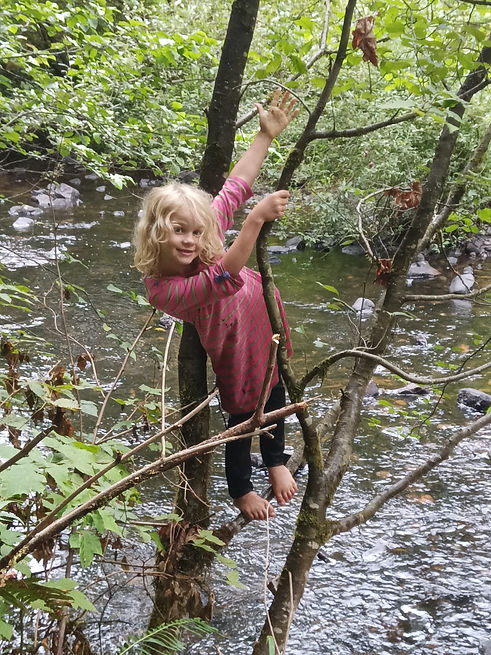
Why This Way of Learning Matters
Children today are growing up in a world of rapid information, digital saturation, shortened attention spans, and increasing social fragmentation. They are exposed to more data than any generation before them, yet often have fewer opportunities for meaningful responsibility, embodied skill-building, and intergenerational mentorship.
Education has largely shifted toward abstraction, acceleration, and performance metrics.
But human development has not changed.
Children still learn best through relationships.
Through story.
Through movement.
Through repetition.
Through meaningful contribution.
Place-based, integrated learning restores what modern systems often overlook: attention, craftsmanship, ecological awareness, and community responsibility.
Research in child development consistently shows that focus, emotional regulation, and long-term retention improve when learning is hands-on and relational. Studies in attention and cognitive development indicate that excessive screen exposure correlates with decreased sustained focus and increased anxiety in children.
At the same time, outdoor learning environments have been shown to improve executive function, stress regulation, and academic performance.
Village-based learning addresses these realities directly.
When children:
-
Grow food
-
Care for animals
-
Work with tools
-
Perform on stage
-
Write for real audiences
-
Contribute to a shared community
They experience agency instead of passivity.
They move from consumer to contributor.
They develop confidence not from praise alone, but from competence earned through effort.
In a world that often pulls children outward into distraction, this model brings them inward toward steadiness.
It strengthens:
-
Attention in a distracted age
-
Skill in an automated world
-
Relationship in a fragmented culture
-
Stewardship in a time of ecological uncertainty
This way of learning is not nostalgic.
It is adaptive.
It prepares children to think critically, create responsibly, collaborate effectively, and move through the world with awareness.
We are not simply educating for the next test.
We are educating the next generation.
2026-2027
Fall & Spring Programs
Spring 2026 marks the official beginning of the Land, Folk & Academic Guild for the 2026–2027 program year.
This is not an introductory session; it is the start of our academic cycle. Families enter into the rhythm of place-based learning, Folk Arts, Theater Arts, and integrated academics that will continue into the Fall and beyond.
Beginning in Fall 2026, the Guild transitions into a private membership-based structure for the full academic year. Families enrolled in the Spring term continue forward with priority as we deepen into a committed, relational village model rooted in continuity, stewardship, and long-term growth.
This is the beginning of the Guild.
The land. The craft. The scholarship. The stage.
All woven together.
Fall 2026
Tuesday & Thursday |10:00am–3:00pm
Fall 13 weeks
Sept 15th-Dec 15th
(closed Nov 23rd-27th)
Winter 2027
Thursday & Thursday| 10:00am–3:00pm
Winter 4 weeks
Jan 25th-Feb 25th
(closed Feb TBD)
Spring 2027
Thursday & Thursday| 10:00am–3:00pm
Spring 10 weeks
March 4th-May 27th
(closed March 29rd-April 2nd)
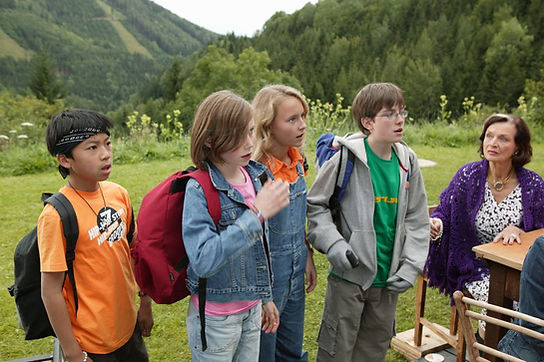
Summer Camp
Ages 6 Years – Teens
June 15–18
10:00 am-3:00 pm
Get ready for four unforgettable days on the land!
Our Summer Camp is packed with hands-on Folk Arts, pond explorations, animal husbandry, regenerative and polyculture farming, creative projects, and wide-open summer fun. Campers will weave, carve, garden, harvest, tend animals, explore ecosystems, and cool off by the pond, all while building real skills and real friendships.

The Feathered Lion Portal is the central hub of connection for our Learning Center families. It is where the village continues beyond the land, a space for parent education, communication, research participation, events, and shared responsibility.
Within the Portal, families access:
Parenting Within Mentorship
Bi-weekly parenting conversations
Special guest teachings
Monthly newsletters
Q&A discussions
Event updates
Community-Based Research participation and updates
A rotating monthly parent “role” that supports shared village responsibility
The Portal is not simply informational, it is participatory. It strengthens relationships, continuity, and developmental awareness across the entire community while documenting what becomes possible when the village is lived intentionally.
The Feathered Lion Portal
The Living Hub of Our Learning Community

Growing Together
Get in touch so we can start working together.


